Friday, 17 December 2010

Exoa Hybrid - The winner Brighton to London Car Challenge

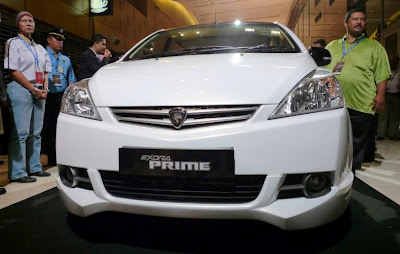
Our national hybrid MPV wins Brighton To London Future Car Challenge! Exora hybrid only uses 2 litre of petrol for 4 hours of journey which covers 60 miles (around 100km). Getting 50km/litre, Exora hybrid wins best extended range electric vehicle categories beating all well known hybrid cars in the world. Proton planning to test 50 of Exora hybrid by giving it to Government for their daily usage before make it available in Malaysia market. Below are details about the challenge.

WINNER! PROTON EXORA HYBRID E-REV = BEST EXTENDED RANGE ELECTRIC VEHICLE!

WINNER! PROTON EXORA HYBRID E-REV = BEST EXTENDED RANGE ELECTRIC VEHICLE!

A new motoring challenge for electric, hybrid and low-emission Cars, LCV’s and Motorcycles to use the lowest energy on a 60 mile route from Madeira Drive, Brighton to Pall Mall and Regent Street, London.

The Royal Automobile Club has launched the Brighton to London Future Car Challenge (BLFCC), a new motoring contest for Electric, Hybrid and Low-Emission Internal Combustion Engine passenger cars to use the lowest energy on a 60 mile route from Madeira Drive, Brighton to Pall Mall & Regent Street, London. The BLFCC will be held on Saturday 6 November, the day before the Club’s world famous London to Brighton Veteran Car Run (LBVCR).

Starting at Madeira Drive this unique live event will use the traditional, but in reverse, 60 mile veteran car run route for a formal finish in Pall Mall and onto a special ceremonial finish and presentation in Regent Street, joining the assembled display of 125 pre 1905 motor cars in the traditional LBVCR International Concours in front of an estimated 250,000 audience.

The event is not a race but a challenge to demonstrate overall new-energy performance with the participating cars being judged on their minimum energy impact during the run.

The BLFCC is open to road-legal; concept, development, pre-production and production four-wheel passenger cars that feature and promote new/alternative energy in the following 3 category types:
1. Electric (EV)
2. Hybrid (HEV)
3. Internal Combustion Engine up to 110g/km CO? emission fuelled by any legal means (ICE).

Up to 100 entries are expected for this inaugural event from manufacturers, institutions, individual motoring pioneers and private owners. The event will be staged, promoted and judged in the above 3 categories. Within each category, entries will be measured in various modes for their energy used during the event route from Madeira Drive to Pall Mall. The challenge will be to complete the event with the least energy impact.

A new motoring challenge for Electric, Hybrid and Low-Emission ICE vehicles to use the lowest energy on a 60 mile route from Madeira Drive, Brighton to Pall Mall & Regent Street, London – Welcome to The Royal Automobile Club’s first promotion and demonstration of new clean-energy motor cars. An event that heralds tomorrow’s pioneering technology.

Future motoring technology is now in abundance and as new-energy vehicles prepare to roll-off production lines in volume the road-side infrastructure, to fuel them, is gradually expanding across our road network. Yet for the daily motorist there is, understandably, uncertainty on what the advantages are and which alternative-fuel method is best! The opportunity to promote and demonstrate ‘live’ these new-energy vehicles is important and this public road demonstration from a major city to the capital provides a unique platform to promote a powerful communication to the potential market and its media.

The Royal Automobile Club, the proprietors of the world’s longest running motoring event – the London to Brighton Veteran Car Run (LBVCR), are proud to launch the Brighton to London Future Car Challenge (BLFCC). A new initiative which will be staged during the 2010 LBVCR weekend to actively promote and demonstrate new cleaner energy technology and echo the pioneering start of motoring in 1896 – the very first London to Brighton motoring event. Just as the pioneering Emancipation Run of November 1896 demonstrated the capabilities of the new found horseless carriage, this new event provides the platform to promote and demonstrate the first radical change of the power of motor vehicles since that day.

Politicians, industry groups and other influential leaders will be invited to witness and participate and, along with entrants, to a special post-event dinner at The Royal Automobile Club in Pall Mall, London.

The organisers encourage entries with media editors and VIP guests/celebrities, along with their families, to participate and drive the event for maximum opportunity. An extensive media programme with specialist, non-specialist and life-style pre and post event coverage will be employed for the best possible TV and national news exposure.

The Royal Automobile Club extends an open invitation to motor manufacturers, importers, institutions and company/private engineers to participate in this inaugural motoring event.

Finishing in front of a c.250,000 crowd in London’s Regent Street, this new event brings comprehensive benefits for marketing/media campaigns and promotions. Entrants will enjoy…

•Extensive pre and post event media (TV, Radio & National/Regional Press) coverage
•Formal entry listing in this important Royal Automobile Club event
•Association with industry/government low-emission motoring groups/campaigns
•Royal Automobile Club trophy awards for each category & overall winner
•Product display/promotion in Brighton, Crawley and Regent Street
•Product exposure along the 60 mile route from Brighton to London
•Opportunity to run liveried cars for optimum roadside promotion
•Refreshment provisions at Brighton, Crawley & London
•Official Starter Plaque and Entry No Plates for each participating car
•Royal Automobile Club finishers medal and certificate for each finishing car
•Awards crest/logo for ongoing company PR, advertisements & stationary etc
•Invitation to the Saturday evening post-event celebration dinner at The Royal Automobile Club.
Starting on the renowned motoring road of Madeira Drive, Brighton the new run will take place on Saturday 6 November 2010, the preceding day of the LBVCR. The event will use the traditional, but in reverse, 57 mile LBVCR route for a formal finish in Pall Mall and onto a unique ceremonial finish in Regent Street, London to join the assembled display of 100 early motor cars in the traditional LBVCR Concours and in front of an estimated 250,000 audience! The BLFCC is NOT a race but a challenge to demonstrate low energy impact over the route from Brighton to London. The event will provide significant opportunities for the media, along with VIP guests/celebrities, to participate (driving with their families?) and support low/zero emission motoring.

TECHNICAL PANEL – A special event technical panel has been established of six respected automotive industry members; Ben Cussons, Chairman (The Royal Automobile Club Motoring Committee); Richard Parry-Jones (Industry); Steve Cropley (Autocar); John Wood (President, Institution of Mechanical Engineers); John Hilton (Flybrid Systems), Dr Ricardo Martinez-Botas (Imperial College London) and David Bizley (RAC Motoring Services). This panel will also form the Event Judges who will evaluate each entry within the Event criteria.

ELIGIBLE CARS – The event is open to road-legal; concept, development, pre-production and production passenger motor cars, light commercial vehicles (3.5 tonne) and motorcycles that feature new/alternative energy in the following three categories: Electric (EV); Hybrid (HEV) and Internal Combustion Engine up to 110g/km CO? emission fuelled by any legal means (ICE).

THE CHALLENGE (Optional) – The event will be staged, promoted and judged in the above three categories. Within each category entries will measured for their energy used during the event route from Madeira Drive, Brighton to Pall Mall, London. This will be judged in four modes as detailed in the Entry Regulations. The challenge will be to complete the event with the least energy impact in the time allocated. With 3 categories and 4 modes there will be 12 winners plus one overall winner per vehicle type.

AWARDS – Each of the category winners will receive an engraved Royal Automobile Club trophy. The overall winner will receive the coveted Royal Automobile Club Gold Medal. There will also be an Award for the best private entry. Each of the above will receive a crest stamp/logo for use in company PR and each classified finisher will receive a Royal Automobile Club medal and certificate.
ELIGIBLE VEHICLES – The event is open to road-legal; concept, development, pre-production and production

•Passenger Motorcars
•Light Commercial Vehicles (max 3.5 tonne)
•Motorcycles
that feature new/alternative energy in the following three categories:

1.Electric (EV)
2.Hybrid (HEV)
3.Internal Combustion Engine up to 110g/km CO? emission fuelled by any legal means (ICE)
ENTRY – The organisers seek a maximum 100 entries for this inaugural event and anticipate entries from manufacturers and importers, from non-commercial institutions (Colleges/Universities etc.) and from private entrants. Entry costs are detailed in the Entry Regulations and Entry Form.

REGULATIONS – The Official Entry Regulations provide the relevant event information. However, as this is a new event the structure, just like the subject, needs to constantly evolve and the Organisers will continue to fine-tune the event for the maximum benefit of all involved. Contribution from entrants is welcomed.

NEW PROTON EXORA MC

Proton Exora MC unveiled – new colour, trim and exterior enhancements


We are at Proton’s Centre of Excellence (COE) now, where Proton have just launched the new Proton Exora MC. MC stands for minor change, which is one step less comprehensive than a facelift for the MPV, which Proton MD Dato’ Syed Zainal Abidin said the company is already working on and will come later.

Back to the Exora MC, which looks much better and somehow “more premium” than the car it replaces. Most of the effect is from the new Plum Red exterior colour, which joins four other hues.

Other changes on the outside include the newly designed 15-inch alloys (now featuring five twin spokes) and a new bodykit.

The latter is most obvious up front, where the front lip follows the look of the Exora Prestige seen at the model’s debut last year.

Inside, the most obvious change is the colour of the trim, which is now in dark grey (from very light grey).

The centre stack used to have a “brushed metal” texture, but is now smoothened out with some subtle graphics in place.

The leather seats in the High-Line display model pictured here are also in black.

The door trim also sports a strip of suede/alcantara style of material, which lifts the ambience a bit.

There’s also a handy boot organiser (divided into three sections), which all trims except for the Base-Line model will get. The updates are small but make a big impact – the new colour really suits the car quite well, the chrome on the bumper complements the chrome on the grille nicely, and the darker interior looks better. Just in time for balik kampung.

OTR prices are up spec-for-spec by RM1,000. Here’s the list:

  • Proton Exora B-Line MT RM58,998
  • Proton Exora M-Line MT RM65,998
  • Proton Exora M-Line AT RM70,998
  • Proton Exora H-Line AT RM76,998

Sunday, 11 April 2010

Excelent Protection For Exora

PROTECTIVE GLASS COATING FOR CARS

KristalBond Makes You a Safer Driver

Until now, sun screening for glass windows meant simply sticking a layer of plastic film over a glass surface.

While it does offer some form of protection from UV and Infrared rays, this layer of plastic firm tints the glass and compromises your view and peel over time, further obscuring your all-round vision.

With KristalBond, you get a long-lasting coat that blocks out the sun, and not the light, giving you optimum clarity, day and night.


KristalBonding Does Not Alter The Original Safety Features of Glass

All car windows are designed to shatter on impact. KristalBonding your glass windows will not change this safety aspect. Can your protective screen offer you this protection guarantee?

Keeping Cool Under The Sun

KristalBonding keeps the interior of your vehicle cool even under the heat of the mid-day sun. Anyone getting into a car parked under the dun will appreciate this. Even your air-conditioner will perform more efficiently with the lessened load.

No More Color Fading

Your car is one of your more expensive investments. You'll be glad to know that KristalBonding will also protect your car's upholstery, dashboard and interior from the colour fading effects of the sun's UV rays.

100% JPJ Compliant

With a Visible Light Transmission (VLT) Test certificate from SIRIM, you can drive with the assurance that KristalBond is in compliance with JPJ (Road and Transport Department) regulations.

Ultra Smooth Finishing

Through Nanotechnology, KristalBond can provide smooth finishing regardless of the contours and curves. Out skilled application specialists are fully trained to provide superior smooth finishing. Since this can be achieved at room temperature, you can have your car KristalBonded with the minimum of inconvenience.

Wednesday, 14 October 2009

Monday, 5 October 2009

Exora chasiss

Chasis Specification Reviews

The last news we’ve mentioned that the new Proton MPV, Proton Exora will be set for launched on 15 April 2009, which was widely announced by the Proton themselves. Since waiting for the day, 15 days left, let us have a look on the chasis reviews of the Proton Exora. Well what seen was the latest and the teaser series of Proton Exora MPV 7 seater chasis, but what make us want to review is the materials used to build such structure.

As what seen, the Exora will have equipped with CamPro CPS, but most denied about the problem of using such engine for such car as some think it is impossible to for the engine to hold the car. The fact is the engine will have less lug around since the front end chasis is made of plastic reinforced with metals and the subframe uses hydroformed subframed tehcnology to contribute less KGs for Proton Exora.

What more is the chasis is with single piece only that will probably make easier to assembly for the installation of the fron end module. So what happened if the assembly becomes more easier? Surely the cost for maintenance of front one would probably be much lower while maintaining the real quality of the car at the same time. So judge yourself and proud of our Proton Exora.

Monday, 28 September 2009

CAMPRO TECHNICAL SPECIFICATIONS


1.3L CAMPRO IAFM 1.6L CAMPRO 1.6L CAMPRO CPS
VALVE MECHANISM 16-Valve DOHC 16-Valve DOHC 16-Valve CPS DOHC
TOTAL DISPLACEMENT 1322cc 1597cc 1597cc
BORE 76mm 76mm 76mm
STROKE 73.4mm 88mm 88mm
MAX OUTPUT (kw/rpm) 70/6000 82/6000 93/6500
MAX TORQUE (nm/rpm) 120/4000 148/4000 150/4500
FUEL TYPE Petrol Petrol Petrol

1.6L CPS & 1.6L CAMPRO TORQUE CURVE COMPARISON

1.6L CPS & 1.6L CAMPRO POWER CURVE COMPARISON


Saturday, 26 September 2009

Exora Engine specification - Campro

CAMPRO ENGINE SPECIFICATION - PROTON ENGINE TECHNOLOGY ON SAGA, WAJA, SATRIA, PERSONA & GEN2

CAMPRO engine is the combination name of Cam Profile engine developed by Proton with help from lotus technologies. Basically, Campro engine is just a normal engine which can be used with future latest technology like variable inlet and iafm. they claim that this engine provide more power and less fuel consumption. Recently, they have shown that what they claimed is true by winning the most fuel efficient family cars with Proton Persona.

CAMPRO ENGINE SPECIFICATION -PROTON ENGINE TECHNOLOGY ON SAGA, WAJA, SATRIA, PERSONA & GEN2 AND NOW ON EXORA

All Campro engines incorporate with drive-by-wire technology (specifically electronic throttle control) for better response,eliminating the need for friction-generating mechanical linkages and cables. There have been some issues with cracking oil pumps but apparently Proton have introduced a new part recently to solve this problem. A recall has not been announced.

CAMPRO Basic DOHC engine

CAMPRO ENGINE SPECIFICATION - PROTON ENGINE TECHNOLOGY ON SAGA, WAJA, SATRIA, PERSONA & GEN2

The basic Campro engine coded as S4PH is a basic DOHC 16-valve 1.6 L engine that produces 110 bhp (82 kW) @ 6,000 rpm of power and 148 N·m (109 ft·lbf) of torque. This is the engine that powers the Proton Gen-2. The S4PH engine can be fitted with Cam Profile Switching (CPS) and Variable Inlet Manifold (VIM) technology. Besides this 1.6 Litre engine, Proton has produced the 1.3 Litre version of the Campro engine.

Even though the S4PH engine seems to be quite powerful at higher revs, its performance is reportedly sluggish at lower revs and this is proven by driving the Gen-2 uphill where drivers who drive the manual transmission version have to shift a lot between 2nd gear and 3rd gear. This is due to its torque dip in the crucial 2,000 ~ 3,000 rpm operating range, where the torque actually decreases before picking up back to the maximum torque at 4,000 rpm. This torque characteristic can be clearly seen in manufacturer published engine performance curves.

Another engine option for the basic DOHC engine is a 1.3L engine coded as S4PE. The S4PE engine produces 94 bhp (70 kW) @ 6,000 rpm and the torque of 120 N·m (89 ft·lbf) @ 4,000 rpm, which is more powerful than the other 1.3L rivals, even with variable valve timing technology, it also (like its bigger brother) displays a torque dip at typical engine speeds of 2,000 to 3,000 rpm.

CAMPRO ENGINE

CAMPRO CPS ENGINE TECHNOLOGY (CPS & VIM)

The Campro engine utilizes two ingenious technologies to give high power and rapid response, whilst maintaining low fuel consumption. Cam Profile Switching (CPS) and Variable Intake Manifold (VIM) technology.

Together, these technologies give the best if both worlds, essentially combining the best characteristics of two different engines in one compact package. The usual reduction in peak torque caused by High Lift cams is corrected by the Long Runner. The short runner works with the high lift cams to re-tune the engine and generate more power at high speed.


CPS & VIM : How It Works

Engines create power from combusting a mixture of fuel and air. Valve lift creates a gap to draw air into the combustion chamber, and this gap influences the ratio of air in the mixture. Ordinary engines have fixed rate of valve lift, but Cam Profile Switching gives variable valve lift, for optimised airflow into the engine. A High Lift cam profile improves maximum power, whilst the Low profile offers fuel efficiency and low emissions.

Air is supplied to the valves by the engine’s intake manifold. Variable intake Manifold technology intelligently changes the rate of “breathing” according to the engine speed. At low speed, air will drawn through the Long Runner manifold. The resulting slower air flow allows more efficient, thorough mixing of air with fuel. At high speeds, the Short Runner takes over to supply more air for combustion, faster.


IAFM (Intake Air Flow Module)

The CAMPRO engine is now enhanced with a new air intake management system - the Intergrated Air Fuel Module (IAFM) technology. It helps the engine "breathe" better at offer you the best of both worlds - greater fuel efficiency at low speeds and better performance at high speeds. Be it a short one to the shops or a cross-state roadtrip, every drive will be one you'll enjoy.

THE CAMPRO ENGINE

Developed in partnership with Lotus Engineering, this engine grants PROTON complete vehicle design independence. Its breakthrough engine technology produces low fuel consumption, yet gives rapid, high power response, and can even be produced to run on alternative fuels.

Its represents true world class powertrain engineering, and a revolutionary step forward in engine manufacture, with low toxic emissions, low noise levels and above all, highly economical maintenance of long service intervals.


Major design objectives :
Space-saving transverse east-west direction engine installation


- Designed for long life of at least 10 years or 250,000 km


- Best performance in class


- Flexibility to use future technology (CPS & NGV)


- 80% recyclable to meet 2005 requirements


- comply to future exhaust emission legislation requirement